
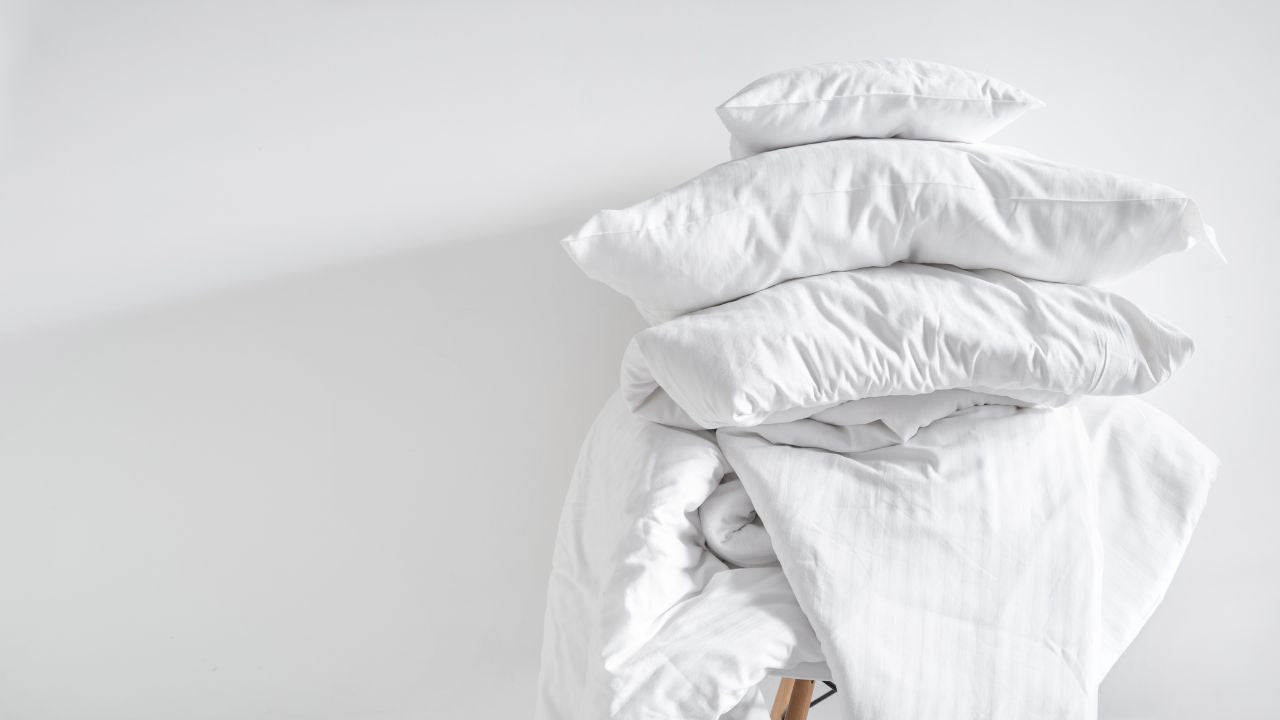
Before learning how to clean pillows, check that yours still provides support. Washing can remove sweat, body oils and surface marks, but it cannot restore a pillow that has flattened or lost its shape.
Check if your pillow is still worth washing
Fold the pillow in half, hold it for 30 seconds and let go. If it stays folded rather than springing back, it has lost its support and washing will not restore it.
Other signs include permanent lumps, flattening that does not recover, morning neck pain and worsening night-time allergies. If neck pain continues after replacing your pillow, the Healthy Sleep Partnership Program can connect you with guidance from health professionals.
You can also find the right pillow for how you sleep using the Perfect Pillow Finder.
How to wash pillows by fill type
Most polyester, cotton, down and feather pillows can go in a washing machine on a gentle cycle, but the right water temperature depends on the filling.
Online advice varies because different fills need different care. Check the care label first, then use this guidance.
|
Fill |
Machine washable? |
Water temperature |
Drying |
|
Polyester or microfibre |
Yes |
Warm, gentle cycle |
Low heat with dryer balls |
|
Cotton |
Yes |
Warm |
Low heat |
|
Down or feather |
Yes, gentle cycle |
Warm |
Low heat until completely dry |
|
Wool |
Check the label |
Cool |
Dry flat away from direct sunlight |
|
Bamboo |
Cover only unless the label allows |
Warm |
Follow the label |
|
Memory foam |
No |
Not applicable |
Spot clean only |
|
Latex |
No |
Not applicable |
Spot clean only |
Remove the pillowcase and protector first. Use mild liquid detergent, skip bleach and fabric softener and run an extra rinse. Washing two pillows together can help balance the drum. Dry each pillow completely, as moisture left inside the filling can lead to mould.
How often should you replace your pillow?
Most pillows need replacing every one to two years, though the useful life varies by fill and regular condition checks matter more than one general rule.
|
Fill |
Replacement guide |
|
Polyester |
6 months to 2 years |
|
Down or feather |
1 to 3 years |
|
Memory foam |
2 to 3 years |
|
Latex |
2 to 4 years |
Protect your pillow with Mattress and Pillow Science pillow protectors
Cleaning can refresh a supportive pillow, but it cannot restore one that has lost its shape. A pillow protector helps keep sweat, skin oils and dust away from the filling so the pillow stays cleaner for longer.
Explore the Mattress and Pillow Science pillow protector range or contact the team for help choosing the right option.
FAQs
Is it safe to wash pillows in the washing machine?
Yes, for polyester, cotton, down and feather pillows. Memory foam and latex need spot cleaning.
How often should you wash pillows?
Wash suitable pillows every three to six months.
How do I get the yellow out of my pillows?
Use a warm wash with mild detergent if the care label allows it. Heavy yellowing may also signal that the pillow is due for replacement.
How do I know if my pillow needs replacing?
Use the fold test and check for lumps, lasting flattening or morning neck pain.
What is the lifespan of a pillow?
A pillow may last from six months to four years, depending on its fill.
Is it worth washing pillows?
Yes, provided the pillow still springs back and offers support.
What is the 2-2-1 pillow rule?
It is an interior styling rule for arranging two large, two medium and one lumbar throw pillow. It is unrelated to pillow care.
Can you wash a memory foam pillow?
No. Remove and wash the cover, then spot clean the foam.


Leave a comment
This site is protected by hCaptcha and the hCaptcha Privacy Policy and Terms of Service apply.